A calling ...

"We are called to be architects of the future, not its victims."

"Make the world work for 100% of humanity in the shortest possible time through spontaneous cooperation without ecological offense or the disadvantage of anyone."

- Buckminster Fuller
Showing posts with label Favorites. Show all posts

Saturday, February 5, 2011

Reflection on a week in classrooms

Overview:
During the past week, I worked in multiple grades as a resource teacher, in Kindergarten, 5th grade GT, and in 1st grade. Throughout the week, I've been reading Endangered Minds, by Jane M. Healy, PH.d., which cites a troubling trend:

For the vast majority of American youngsters, declines in math and science achievement as well as in verbal skills are a source of national alarm. Recent scores on the National Assessment of Educational Progress (NAEPP have shown particular deficiencies in higher-order reasoning skills, including those necessary for advanced reading comprehension, math, and science. Although younger students, in the wake of a clamor for educational reform, seem to have improved test scores slightly, "most of the progress has occurred in the domain of lower order skills." (Healy, p. 20)
As someone who hasn't exactly enjoyed a smooth upward rise in the field of education, I've continually refined my craft by carefully reading professional literature, co-planning and co-teaching with master teachers,  seeking help from specialists in difficult situations, and by simply not letting go.  Over time, I've developed a repertoire of best practices that were on full display this week, keeping my flickering chances of remaining in education alive as I approach a fork in my destiny.

My Dilemma:
After clawing my way into the field of education, against long odds having done whatever it has taken to become an effective teacher, as well as an inspired teacher, once again I'm feeling the need for a little divine intervention.  Soon, I will need to respond to a request for interviews with a retail lumber chain, because I must face up to cash flow realities -- I'm an expert in the lumber business. This week, I also submitted my application to a local graduate school, to complete a 1-year program to earn a K-12 license in Special Education. This is my "hail mary" pass.

My uphill battle to remain in education was boosted by what a good friend and colleague had to say about me in her recommendation letter:
Daniel really got know each one of his 21 kindergarten students.  He guided them, taught them, and learned WITH them throughout his experience.  He learned about their strengths, their needs, and their individual learning styles.  Many students often enter *** with behavioral and academic challenges, but Daniel faced these challenges head on and did everything in his capability to ensure each student got what he/she needed.  Every afternoon, when parents arrived to pick up their children, Daniel could be seen talking with parents, sometimes offering suggestions for how to help at home or sharing a story of success that made his face light up just as much as the parent's face did! Daniel showed much pride in the accomplishments of his students  and it was evident that he was enjoying what he was doing -- teaching!
My good friend and colleague, who happens to be the best teacher I have ever worked with, proved to me what I had known all along; I've always known that I need to be working with the right people.

What I enjoyed:
Here are 7 great classroom management practices that worked for me this week:
  1. Begin in a friendly way (Dale Carnegie).
  2. Invite student talk.
  3. Encourage movement (Brain Gym).
  4. Coordinate every transition because timing and pacing matter.
  5. Model not only learning strategies but also core beliefs.
  6. Celebrate learner successes instead of seeking fault.
  7. Use gestures, eye contact, and other non-verbal cues that remind, rather than threaten.
Warming up a 3rd grade reading group:
As a resource teacher, I guided three 3rd graders in Language Arts in a rear corner of a school's library.  I wrote a simple two sentence Interactive Morning Message on the white board, which included a capitalization error and a missing period that children needed to find. My interactive question was, what did you do in the snow (an open-ended question)?


I noticed that one of the children, the same child who in the classroom had trouble locating his Language Arts File, didn't seem to be visually tracking, so I asked my question in different ways. Recently, a Special Education teacher had stressed to me the importance of getting a particular child talking -- that child, who had seemed depressed, revealed to me in our conversation that her mother had gone away to her home country, El Salvador, because some bad men had shot her uncle. I thought a similar strategy might work with my group of 3rd graders. To begin in a friendly way and invite student talk, I prompted for discussion:


What are some things you did over the holiday and on your snow days? Who went outside? Who made a snowman? What did your snowman look like? Who threw snowballs? Who walked in the snow? What sound did it make when you were waking? These questions broke the ice, and got the children talking. After a while, since everybody was having so much fun talking about what they had done in the snow, one of the children asked, "when are we going to start working?"


I replied, "we are working; talking about what you know helps get your mind ready for reading and writing." Next, children shared stories from their writing notebooks. The children had written about the 3 little pigs and the big bad wolf. All were about a sentence or two long. One of the children had drawn a picture of the wolf in boiling water. Another had shown the houses.  The third had forgotten his writing folder and seemed totally ashamed because he didn't have his writing notebook in his folder.


I asked the child with the picture of the wolf in the boiling pot, "how did the wolf get in the boiling pot?" I asked what details the children remembered about the other houses in the stories. The child who had forgotten his writing notebook felt invited to join in. His eyes lit up as he remembered details, "no, the first house was made of straw, not sticks."


Then, I connected to a different version of the story written by John Scieszka entitled, The True Story of The 3 Little Pigs, which they all had read. The children enjoyed sharing what they remembered about that version.

To transition to reading, I had the students stand up and quickly led them in doing Brain Buttons, a Brain Gym routine. Students scooted over to the Fountas and Pinnell leveled reading basket and they carried the books over to the table. I gave the children a choice of three books from a selection of leveled readers. They chose The Pool.
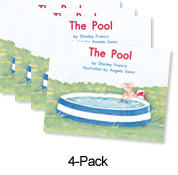

We began with a picture walk and I asked the children to make a prediction. Doesn't this remind you of The Mitten? I asked.

The children's eyes lit up as they noticed the connection.  I had each of them read The Pool, and I sidled next to each of them as they read to offer guidance on word solving and to prompt for comprehension.

Since we finished a little early, we asked the librarian to help us find the John Scieszka version of the 3 little pigs. I read with expression to model fluency, using voices, as we emotionally connected with a hilarious story.


Brain Gym in the Computer Lab:
I worked with classes in the Computer Lab as they worked on SOL Pass. Each of the classes worked on social studies, science, and a "fun" site. The Technology Specialist set me up on the SmartBoard, and suggested that I use PowerPoint to communicate the agenda, since the whiteboard was covered by the SmartBoard. That came as a surprise, because I didn't realize that my log in carried over from school to school. The Resource Teacher had included a stretch in her plans, so I incorporated a link to a Brain Gym Video. We used Brain Gym to encourage movement and coordinate every transition! My experience working across grade levels enabled me to make appropriate curriculum matching decisions, so that students were never asked to practice using activities for which they weren't ready.

Kindergarten Writer's and Readers:
In Kindergarten Writing Workshop, I taught an inference lesson using Cookie's Week, written by Cindy Ward, and illustrated by Tomie dePaula.  We began with a picture walk and made predictions.

Students then drew a "what happened next" picture and wrote about it. Having launched a Kindergarten Class earlier in the year, which used the Lucy Caulkins model, I incorrectly assumed that the procedure in the class was that children would start with their drawings, then do their writing. Apparently, that isn't normally the case in that classroom, but we went forward in the Lucy Caulkins mode anyway. Allowing the students to draw pictures first gave me a chance to have children explain their thinking, which allowed me to check to see if they knew what to do and redirect students as needed.  By the time we began writing, I was comfortable that every student had thought first before writing sentences.  As children wrote, I encouraged individual students to stretch out sounds and use invented spelling. In this way, I was able to model not only strategies but also core beliefs about learning, especially my belief that their ideas truly mattered.

After we transitioned to literacy stations, my role was to manage the transitions and redirect students who were working independently while other students worked in guided literacy groups. One of the independent activities was Writing the Room; students didn't seem to understand it as an invitation to walk around the room, so I modeled the process. Instead of blaming the children for being lazy, I saw they needed a little guidance.  My manner of intervention allowed me to celebrate learner successes instead of finding fault. Thus, my decision got children excited about learning a new procedure instead of shutting them down.

Since children were in the mood, I was able to extend with a follow-up activity involving alphabetizing the 10 words they had found while Writing the Room. Two Kindergarten students explained the rule.  How cool is that?!!!

5th Grade GT Problem Solving:
Since I caught up with the 5th grade class in the lunchroom, my first encounter with the class, which numbered about 25 students, was in lining them up and walking back to the classroom. To facilitate appropriate line up and hall behavior, I use gestures, eye contact, and other non-verbal cues that remind, rather than threaten. I had them at hello.

After going over their math homework, in our first lesson, 5th graders were learning how to use constants and variables in mathematical expressions. The book's lesson involved a discussion of key terms (constant, variable, expression, and various operations such as addition, subtraction, multiplication, and division). In their homework, children solved expressions in a chart at various values of the variable. In the lesson examples, story problems required students to apply what they had practiced the night before to set up appropriate mathematical expressions. To practice, I gave the students only the odd problems in the first section, but all the story problems. During natural transitions, and when I noticed students losing focus, we did a few Brain Gym routines.

During indoor recess (we didn't stay outside because there was too much ice and not enough space on the playground) one young lady asked for help solving a paper folding problem.  That was a blast!

We set up a China video for Social Studies.  Students used an interactive notebook, and glued in a Dynasties Chart as the RAP (Review and Preview -left side), and a 321 as the WOW (Words of Wisdom -right side). I paused the video in regular interviews to facilitate discussion, questions, and response.

Responses to My Blog:
Last week, Poetic License was honored with a response with the illustrious Max Weismann, "President/Director and Co-founder of the Center for the Study of the Great Ideas in Chicago with Mortimer Adler, and the founder and chairman of the Great Books Academy (over 3000 students)." He alerted me to a recently rediscovered classic footage of Mortimer Adler discussing How to Read a Book. I received a copy of the video for the price of a small donation.***(post corrected, thanks to Max Weismann). 


I was also honored with a response from K. P. Kollenborn, a writer from Kansas, who enjoyed my post about The Art of Gaman and chose to follow my blog.  Thanks for publicly following my blog!


My post about The Art of Gaman struck a raw nerve and stirred up my family's phone lines. I look forward to my mom's response, to posting additional parts from Rising Son in The West, and to future responses.

Tuesday, February 1, 2011

The Art of Gaman / American Art

The Art of Gaman / American Art

How the Art of Gaman affected me personally:
Gaman is a Japanese word that means to endure unspeakable suffering with dignity and grace. My sister Dawn, her husband Rowland, my dad and I visited the Renwick Gallery over the weekend. Dawn digitally recorded my mom's reactions to the artwork. I hope to post my mom's voice recollections soon.

One of my high school research projects was to visit the National Archives. There I located documentation about the internment of my mom's family during World War II. Later, after monetary reparations were paid in the mid 1980's that documentation helped me secure payments from the US Government of $10,000 per individual on behalf of my mom, two uncles, and my grandmother.  In high school, what I learned about the indignities my mother suffered as a child forever changed me.
My grandfather's arrest order
(http://www.foitimes.com/internment/SF3.pdf)

How the Art of Gaman affected my mother:
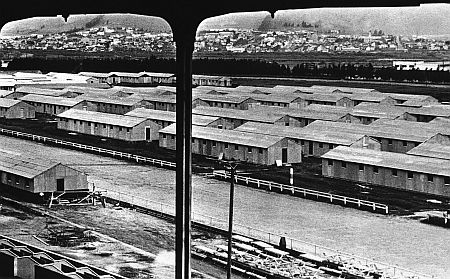
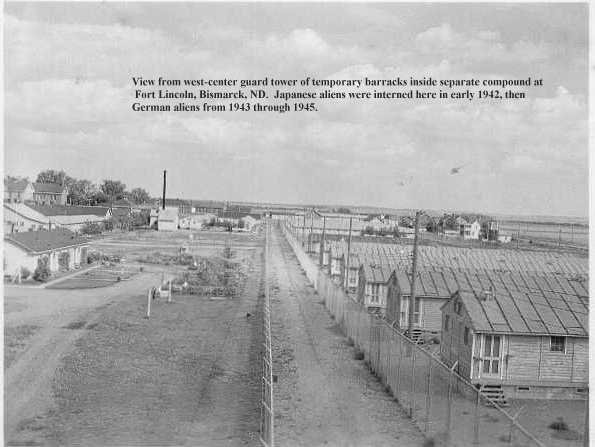
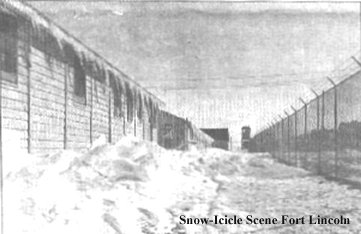
Shortly after the bombing of Pearl Harbor, on December 7, 1941, my grandfather, Yunoksuke Tsuchitani, like many other business and community leaders, was taken in the middle of the night by men wearing dark suits. At the exhibit, my mom remembered that my grandfather had been wearing only the clothes on his back -- without a coat, he was taken to a military prison in Bismarck, North Dakota. There, because of the freezing conditions, he lost his hearing.  Later, he was transferred to burning hot Lordsburg, New Mexico. My mom, 6 years old at the time, did not see her father again for over 3 years. The family was reunited at Tule Lake as the war was ending.


As a 6 year old child, my mom witnessed her mother burning all their household possessions after receiving the evacuation notice, which was prominently displayed at the exhibit behind a flag of red, white, and blue cranes.  Photographs of Tanforan Racetrack at the entrance reminded her of the smell of horse manure.  Her grandparents, her aunt Pepe's family, her mom, her two baby brothers Isamu and Ken, and she were herded into horse stalls, divided from the other families by sheets.
 (http://www.vpr.net/news_detail/85905/
The Obata drawing of a dust storm from inside a barack reminded her of her own hastily constructed dusty barack in Topaz.  She recalled how some of the women would laugh at her grandfather, who occupied his time by cleaning the camp toilets. He always had a set of mops leaning against the barracks.

I remember my mom telling me long ago about the many ways that children found ways to amuse themselves. The collection of birds hand carved from scrap wood, with each feather carefully painted, reminded her about how she used to tame wild birds; one of her pet birds loved shiny objects and constantly flew home with other peoples' jewelery. She remembered the awful look her mother had when she came home to discover her bird had electrocuted itself while tugging on an electric cord.  Another source of amusement I remember her telling me about was how she and her brothers used to catch polywogs in the drainage ditches, then watch them develop into frogs.

The Shintaka shell pins reminded her of how her grandmother and aunt also used to make these kinds of pins while at Tule Lake. She remembered collecting shells for them.


The collection of walking staffs reminded her of the ironwood staff her father had sanded to perfection.  Lightweight, thin, and perfectly straight, her father's walking staff was strong enough to carry a load of luggage.

One artist heated triangular files in a potbellied stove and pounded them with a hammer to make the chisels that he used to carve a traditional Noh Mask. These artists were given neither tools nor materials. Still, artist after artist found a way to create art from nothing but scraps.


An idea for a book:
As an undergraduate at Georgetown University, during my senior year, I took a course called US in the 20th Century under Professor Dorothy Brown. I wrote a paper called Rising Son in the West, about how my grandfather, an orphan, rose from rags to riches to became one of the wealthiest men on the West Coast. I spent my Christmas Holidays in 1984 in the Library of Congress reading California newspapers to learn how a climate of racial discrimination led to the internment of Japanese Americans.  Today, I am noticing a similar climate of fear and discrimination directed toward a wave of recent immigrants from south of the border.

The story of Yunosuke Tsuchitani is a Horatio Alger story with a dark side. He was born on the island of Iwaishima in 1899, 99 years before my son Joseph was born. My grandfather was an orphan at age 9. As a child, he earned money by writing letters for illiterate adults. In 1917, as a member of the Japanese Merchant Marines, he came to America on a tall ship. He jumped ship in San Franciso Harbor and swam to shore in shark infested waters. His brother Ruyiji, who had left the island first, bribed the immigrations official.

Starting as a busboy, studying English at night, my grandfather rose to a management position in the Pacific Trading Company. He later owned a successful restaurant located near a military facility, which he sold in order to found the White Star Tuna Company. After labor problems shut him down, he later sold out to a company that became Chicken O' The Sea. While recovering from depression, he found the inspiration to create a market for straw flowers. He invented a system for attaching wire to the flower heads, allowing them to be shipped East via the Union Pacific Railroad. He created a complete grading and marketing system that enabled many Japanese farmers in the Bay Area to become fabulously wealthy by growing strawflowers instead of tomatoes. He was known as The Straw Flower King.

Before Pearl Harbor, my grandfather owned a fleet of ocean going yachts. The Di Maggio family took care of his boats.

Like many Issei (first generation people from Japan), my grandfather had been sending money home for many many years. A community leader, he contributed to charitable causes; one of those charities was a fund for the widows and orphans of soldiers. Contributions to that charity provided the legal basis for his incarceration.

As an Issei, my grandfather had been prohibited by California Law from buying land. My grandmother, who was Nissei, had signed her name to help relatives purchase land, but had refused to sign on behalf of my grandfather. At the time of his arrest, all of his financial assets were invested in his business. His boats were burned. He left America penniless.

In war torn Japan, my grandfather found himself and his family dependent upon the charity of relatives. As I prepared to give a speech at my grandma's 80th birthday (17 years ago), my mom told me about a harrowing boat ride she took during a storm from Iwaishima to the mainland as she accompanied her mother on her first job search.

In the camps, my mom had used a dictionary to teach herself how to read. With only three years of formal education, while attending a Methodist School in Fukuoka, Japan, my mom received a full scholarship to the University of Nebraska. In her application letter, she quoted Nietzsche.

A quote from Nietzsche:

a
[Anything which] is a living and not a dying body... will have to be an incarnate will to power, it will strive to grow, spread, seize, become predominant - not from any morality or immorality but because it is living and because life simply is will to power... 'Exploitation'... belongs to the essence of what lives, as a basic organic function; it is a consequence of the will to power, which is after all the will to life.

from Nietzsche's Beyond Good and Evil, s.259, Walter Kaufmann transl.


Wednesday, January 12, 2011

Recommended Children's Books that Teach Values

Recommended Children's Books that Teach Values

Today, I will reread an article from The Great Books Academy entitled, "What is a School," by Jacques Barzun. I will reread it again and again until I have a better sense to which I agree and disagree so that I can fully participate. Barzun states that the purpose of a school is to "remove ignorance." While I cannot say that I agree with Barzun's prescriptions for removing ignorance, I cannot disagree with his choice of guiding questions for the discussion:

[T]he first of our concerns is How does a teacher teach? Next, How does the learner do his part? Followed by, What should be taught? Then, How to test the knowledge acquired? Next, Who should run the school? followed by, What role for the parents? And lastly, What should go into teacher training?
Decisions about how to teach need to be based on what we know about how learners learn, i.e., best practices. One thing is certain, an engaged learner learns faster and more effectively than someone who is not engaged.

Questions about a learner's responsibility involve a question of a learner's values, which leads to important decisions about values. Do schools have a responsibility to teach values? Or, is it the parents job?

What should be taught and who should teach it involves cultural values, but how does a pluralistic society decide upon its core curriculum? Traditions and the political climate are inescapable factors driving decisions about what ought to be taught.

Other key factors involve fundamental shifts in the relationship between people and their environment.  In a 1967 article entitled, The Root Curriculum, the author, a Stanford engineer, made a case for restructuring education based on learning disciplines appropriate to where society is going, as opposed to tradition alone.

I've been pondering how to develop a new genre (or is it an old genre?) that involves rewriting traditional literature in new settings to teach values. That's how I found the website that I posted here today. I'll be looking to compile lists of these kinds of websites and materials as a starting place. I'll be working on the rules of genre. Once I learn the rules, I should be able to teach children or anyone else how to write them. If the purpose of the school is to remove ignorance, one of the first things from which ignorance needs to be removed is the extent to which values drive instructional decisions. Learners must become fluent in our society's values.  Values are to the lighthouse, as learners are to the mighty Missouri when it ironically ordered the lighthouse to yield. What better way to engage learners in a conversation about values than to have them write and draw and act them out?

For me, reading has always been about the conversation.  Just as T.S. Eliot created modern poetry in response to Dante and a modern world tone-deaf to classical traditions; just as Dante created new literature in response to Boethius, Augustine, John, Paul, Vergil, and Homer, and in response to the current events of his day; even young readers can be introduced to the notion of a chain of conversation and fashion their own responses.  I hope to begin working with a professional illustrator as this future writing project gathers momentum.

I am so happy to have returned home and found that I received an unsolicited comment on my Blog.  Mr. Wong kindly provided a link to the full text of Barzun's article, "What Is A School?" To answer Mr. Wong's question, sometimes I use a reading strategy analogous to a grazing cow.  I post as I chew the cud. Last night, I skimmed and scanned Part I of the article provided by the Great Books Academy.  Tonight I'm grazing again, reading and responding as I go.  Last night, as I read Barzun, I had fundamental disagreements with specific prescriptions based on my experience "in the field" and prior academic readings.  For example, Barzun's statements about phonics do not take into account excellent research about developmental stages and the three cueing systems upon which the balanced literacy framework was developed; moreover, I've witnessed how Kindergarten students initially connect the idea of letters to their names (whole word) and uppercase letters to the first letter in their name.  Whole to part phonics: how children learn to read and spell, by H. Dombey and M. Moustafa, provides a more nuanced view of phonics than Barzun, in my opinion.  When I read the analogy Barzun used to describe what teaching is and what teaching is not, however, I was hooked on the analytical framework Barzun provided.  His questions provide an excellent starting point.

Too often young learners are subjected to what Jerome Bruner, in The Culture of Education, called "the thousand images"; like the traveler in an unfamiliar land asking for directions, as described by Barzun, children are too often fast fed a diet of decontextualized information; not surprisingly, many American children "get lost" or become disengaged and refuse to submit to institutional torture.  Effective teaching involves what Robert Marzano calls, "building background knowledge."  According to recent studies in brain science, "synapses that wire together fire together" and "too fast doesn't last" (the source of the brain science quotes are from Dr. Norman Doidge, as cited in an earlier post).  Thus, the traveler who is provided guidance (i.e., background knowledge) as opposed to raw data alone is more likely to find his destination.  Speaking of destinations, learning is a journey and the destination is as much a matter of cultural values as it is a matter of changing relationships.  A quality education enables learners to make connections, which exponentially increase the velocity of thought.

We will graze again.