Response to Intervention (RTI), a major point of discussion while I was in Marymount University's graduate program, has become institutionalized. Teachers are being required to leave a document trail of "lower-tier interventions" before a student can be disciplined, reported as failing, or routed through Special Education. Nothing new! What's different with a new Superintendent is the level of school-wide focus, and the roles of administrators who are focusing on discipline, and how these new roles are affecting what I do for classroom management to ensure that I am doing everything I can to ensure academic success, and the level of scrutiny we all face as teachers to ensure that are being dutiful in following procedures. In response, I am becoming the King of Intervention.
Back at Allied Plywood, throughout the organization one of our mantras was "CYA," the main proponent of which was Gene Scales, who taught me well as a young apprentice. I would characterize "Intervention" as glorified "CYA." As a Special Education teacher, governed by a procedural compliance framework, procedural compliance is the fishbowl in which I swim.
Students I serve this year range from the self-motivated, vivacious Angelica, who has a 95% average in Mr. Lee's team-taught class, whose Math About Me poster I will save as an exemplar, because it is truly for the ages, to the diabolical Johnny who with his death stare reminds me of Jack Nicholson's character in The Shining, an 11 year-old child whom I hope does not have access to a cache of weapons -- he has a below 40% average, has never turned his poster in or most of his other homework assignments, has still never adjusted to the routines of the class, and has already been removed once for giving another child the middle finger, and once, just Thursday, while I was introducing Ratios, for punching another student in the side while getting up to get materials.
During the first week of school, Dontae was ready to "drop" Johnny, and started toward Johnny in a menacing fashion, with Johnny smiling like a chesire cat, before I redirected Dontae outside for a cool down conversation. Big Al, as students were leaving the classroom asked, "May I tell you something?" after I asked Dontae to stay after class for a short while to continue our conversation, a pause that allowed Johnny to leave the classroom unmolested.
I responded, "Is it urgent?" Big Al responded by describing how Johnny had been threatening other students in the hallways.
When I called and spoke to both Johnny's and Dontae's mothers later that afternoon, I received two entirely different impressions. Before calling, I glanced at the Student Information forms that both students had returned. My call to Johnny's mom raised my heebee-jeebies. Immediately after Johnny's mom responded to my report of an incident by telling me that she had received a text that, after Johnny left my room, that "he had the crap knocked out of him" and that his foot had been seriously injured, and that she had to take Johnny to the emergency room, we had a sudden power outage, the phones died, and I was unable to reply that Johnny could not possibly have been hurt by Dontae after leaving my classroom. I had kept Dontae after class because I could see he was still boiling. Later, I had seen Dontae outside in the hall cooling off with big Mr. McDuff. Immediately after the mysterious power outage, I went to the office to discuss my predicament, and was advised by the Mr. D, the Counselor, to email the mother back and copy Mr. Farmer, himself, and our 6th grade disciplinarian, the multi-talented, kind-of-scary, soft-spoken procedural expert, Ms. Smith, who speaks softly but is the de facto authoritarian for the 6th grade. The next morning, the burly ex-marine, Mr. Farmer, Ms. Smith's boss, greeted me at the door, hands on hips. He was wondering why I had gone directly to him, and why Johnny's mom had left messages on his answering machine that she had taken Johnny to the emergency room. I reiterated the facts, which seemed to assuage his concerns, somewhat, but not entirely.
My call to Dontae's mom left an entirely different taste in my mouth. I called Dontae's mom immediately after school. When I looked at the handwriting on the form and the description of her child, I was impressed by her penmanship and her description of a funny, happy child. My point was that Dontae would not be able to access the curriculum if he continued to hold onto his anger during my class. Dontae returned the next morning wearing a warm smile, and has been an engaged learner ever since.
Yesterday, on a Friday, Dontae asked if he could stay after school for help. For Dontae, I made an exception to my Friday rule since he had missed the lesson on Ratios, since I did not want to lose the momentum he was gaining, and since he is not currently passing my class, and gave him a private lesson on how to read and write ratios, and how to use ratios to solve problems. I handed him a multiplication chart while teaching him factoring procedures, as writing ratios in simplest form is part of the standard, and he seemed to benefit from that accommodation. Dontae shared with me how he enjoys working with his mom in the kitchen, which made the exercise of using ratios meaningful to him.
Johnny's pattern of disrupting my classroom, as well as some difficult but less severe cases have been accompanied by an increased level of scrutiny of my classroom management. as Ms. Smith and Mr. D have been in my room on a number of occasions to observe students with behavioral concerns, and Ms. Glenn, the Chair of the Special Education Department. mentioned, "I heard from Ms. Smith that you were having "behavior problems," since I had a relatively high level of referrals during the first two weeks.
"No, I am just being quicker to document my interventions this year," I replied, which seemed to satisfy her. Having been in an out of my room observing all year, Ms. Smith has given me considerable feedback about things I can improve. Wisely, I have been listening. When Ms. Smith speaks, I listen. It's grad school all over again.
Ms. Smith has provided me considerable guidance in redesigning of my classroom. In response my room has become uncluttered up front, all of my vocabulary resources have been shifted to the back wall, and my classroom procedures have been shifted to a bulletin board. The spaces for hanging student work created by Sianan, who had occupied my room previously, have all been taken down. Yesterday, I set up a special cool down desk in the back corner, just for Johnny. Ms. Smith's latest suggestion, a card system, a common elementary school procedure, which is being employed by Ms. Santiago in the room next door, is one I am struggling with, as it originates from the behaviorist approach to learning, and I frankly hate it. I think I will simply leave this suggested unimplemented, as it was just a suggestion, not a directive.
On Thursday evening, after Johnny surreptitiously punched Arman in the side while walking to get materials, I attempted to call every student in my two self-contained classes. Amazingly, I reached most of my parents from my self-contained classes. I am not fluent in Spanish, but I was able to beg parents to speak in English -- I would say, "Su ingles es mejor que mi Espanol. In one case, little Jose, who has done little of the homework in my class, served as a translator for his mother. Yesterday, Jose completed the classwork, mostly correctly.
Yesterday, Ms. Smith helped me clarify the distinction between "Lunch Bunch," and "Lunch Detention," since Carlos, who was in my room for Lunch Detention, was not making the connection that being in my room was a punishment, and had visited the snack machine, and was all smiles. My difficulty was that I had 5 students from Mr. Lee's class, some who were there by choice, and some who were there not by choice, but all were there working diligently. My other students, about 5 from my self contained classes were there not by choice because they had not been doing their homework. The difficulty I was having was that my focus tends to be on helping students who want to be helped. My room is set up so I can move my rolling chair freely around the classroom. I use multiple white boards when I work alongside students. I don't think about the punishment aspect at all.
In order to punish Carlos, a lower-tier behavioral intervention that I am using as part of the chain of documentation Ms. Smith and I will use in the beginning of October, before we let Carlos's parents know in October that nothing we tried during September is working, Ms. Smith suggested, I will need to punish Carlos 1:1, which in the short-term will punish me and all the other students since I won't be able to have others in the room to work with them. The next time Carlos requires me to punish him, which will be Monday, since he was breaking pencils yesterday, I think I will schedule his punishment for next Thursday after school, since my office hours are Monday and Wednesday.
I get this Intervention thing. I know what to do. CYA.
Saturday, September 20, 2014


Saturday, August 30, 2014
Defining Economic Justice and Social Justice | Center for Economic and Social Justice
Defining Economic Justice and Social Justice | Center for Economic and Social Justice
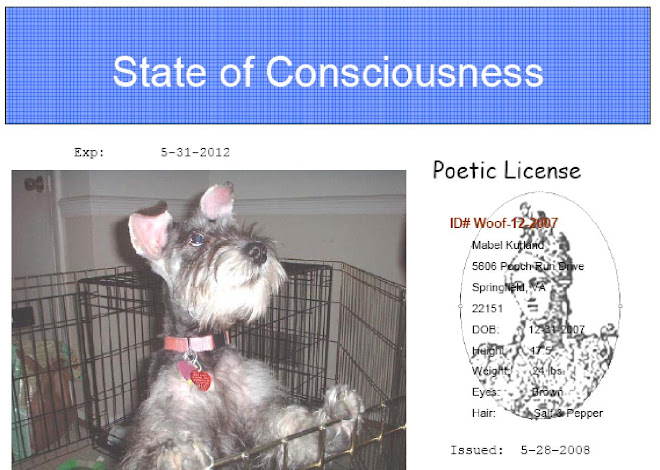
This morning, Mabel took me on a route that goes by her Bandit, a blood hound, who is probably her best dog friend. We too, our dogs' people, have bonded over the years because we share a similar sense of humor and intellectual tastes, and because our dogs are so friendly with each other. Bandit's owner is way more accomplished professionally than I am, and is involved in "strategy" at a far higher level of leadership than I ever will be, although person-to-person he does not project himself as a "power player." I find global strategy interesting, and can discuss it intelligently since it is sort of the family business, since I was a history minor, and since I am a reader, although I feel that I am most effective operating, person to person, more on a micro level, flying under the radar, teaching 6th graders.
Neither Bandit's owner, with his chemical engineering background and high level responsibility, or I with my blue collar lumber business background, shy away from joking about politicians. Today, our conversation turned to certain politicians and the image of weakness and amorality these players project to the world, which serves as an invitation for hostile parties to attack Americans. Both Bandit's owner and I share a similar distaste for politicians, as the two of us are, by temperament, people of action instead of people who seem to worry most about our hair.
Our conversation turned to a book Bandit's owner had read recently about how difficult it was to come to any agreement at the Constitutional Convention, about how everybody hated each other, yet was able to come to an agreement within 5 weeks. I immediately made the connection to Iraq. He chuckled in agreement.
I brought up an image I saw this week of children about the same age as students I am teaching being brainwashed with a hostile ideology, being trained in operating AK47's, and chanting anti-American slogans. A favorite family story, which I did not share at the time, was how as a small child, two guests from the Soviet Embassy, and one of my dad's friends, who we all suspect was probably a CIA operative, came to dinner in Arlington, and my dad had prepared me with a secret handshake and a toast, "Up the Capitalist Revolution!" which upon my dad's cue I repeated at the dinner table. Everybody at the table roared with laughter. In the 60's, Kelso, a former World War II Naval Intelligence officer, described his theory of economic justice as the Capitalist Revolution, although that term has since fallen into disfavor, similar to the name of Washington's football team.
Bandit's owner observed how the Kurds have been "screwed" three times recently. I mentioned that from a strategy standpoint, my dad would argue that America has "ceded the moral high ground" and needs to deliver a vision of social and economic justice to the world based on the Papal Encyclicals and Louis Kelso.
I suggested that he contact my dad, since dad always says that strategy people should understand his strategy for seizing the moral high ground. Bandit's owner needed to finish mowing. I needed to get along with Mabel's walk. Maybe an intellectual seed has been planted with someone in the position to do something about it. Who knows? You never know. If Bandit's person googles Kelso and economic justice, he will find the site I found above. Seek and you will find!
This morning, Mabel took me on a route that goes by her Bandit, a blood hound, who is probably her best dog friend. We too, our dogs' people, have bonded over the years because we share a similar sense of humor and intellectual tastes, and because our dogs are so friendly with each other. Bandit's owner is way more accomplished professionally than I am, and is involved in "strategy" at a far higher level of leadership than I ever will be, although person-to-person he does not project himself as a "power player." I find global strategy interesting, and can discuss it intelligently since it is sort of the family business, since I was a history minor, and since I am a reader, although I feel that I am most effective operating, person to person, more on a micro level, flying under the radar, teaching 6th graders.
Neither Bandit's owner, with his chemical engineering background and high level responsibility, or I with my blue collar lumber business background, shy away from joking about politicians. Today, our conversation turned to certain politicians and the image of weakness and amorality these players project to the world, which serves as an invitation for hostile parties to attack Americans. Both Bandit's owner and I share a similar distaste for politicians, as the two of us are, by temperament, people of action instead of people who seem to worry most about our hair.
Our conversation turned to a book Bandit's owner had read recently about how difficult it was to come to any agreement at the Constitutional Convention, about how everybody hated each other, yet was able to come to an agreement within 5 weeks. I immediately made the connection to Iraq. He chuckled in agreement.
I brought up an image I saw this week of children about the same age as students I am teaching being brainwashed with a hostile ideology, being trained in operating AK47's, and chanting anti-American slogans. A favorite family story, which I did not share at the time, was how as a small child, two guests from the Soviet Embassy, and one of my dad's friends, who we all suspect was probably a CIA operative, came to dinner in Arlington, and my dad had prepared me with a secret handshake and a toast, "Up the Capitalist Revolution!" which upon my dad's cue I repeated at the dinner table. Everybody at the table roared with laughter. In the 60's, Kelso, a former World War II Naval Intelligence officer, described his theory of economic justice as the Capitalist Revolution, although that term has since fallen into disfavor, similar to the name of Washington's football team.
Bandit's owner observed how the Kurds have been "screwed" three times recently. I mentioned that from a strategy standpoint, my dad would argue that America has "ceded the moral high ground" and needs to deliver a vision of social and economic justice to the world based on the Papal Encyclicals and Louis Kelso.
I suggested that he contact my dad, since dad always says that strategy people should understand his strategy for seizing the moral high ground. Bandit's owner needed to finish mowing. I needed to get along with Mabel's walk. Maybe an intellectual seed has been planted with someone in the position to do something about it. Who knows? You never know. If Bandit's person googles Kelso and economic justice, he will find the site I found above. Seek and you will find!
Friday, August 29, 2014
A few inspirational quotes for my classroom

“If I were again beginning my studies, I would follow the advice
of Plato and start with mathematics.”
Galileo Galilei
“[F]ailure
is nothing more than a few errors in judgment repeated every day.
Like the
formula for failure, the formula for success is easy to follow: A few simple disciplines practiced
every day.”
Jim Rohn
Rohn, J. (2013). The Five Major Pieces to the Life Puzzle: A Guide to Personal
Success.
Lake Dallas: Success.
“Mathematics
Is the Science of Pattern and Order.”
A., Van De
Walle John, Karen Karp, Jennifer M. Bay-Williams, Jonathan A. Wray, and Nicole
René Miller. Rigelman. Elementary and Middle School Mathematics: Teaching
Developmentally. Boston: Pearson, 2013. Print.
http://www.momentumiitpmt.com/books/mathematics/Elementary%20and%20Middle%20School%20Mathematics,%208E%20[PDF]/Elementary%20and%20Middle%20School%20Mathematics%20Teaching%20Developmentally,%208th%20Edition.pdf
Sunday, August 24, 2014
Back to My Day Job
Today, after I dropped off a load of mulch in Arlington -- 8 bags of 3cu. yds of shredded hardwood, and 2 bags of 3cu. yds. of cypress -- mom reminded me of her opinion that my writing skills are diminishing. She once again reminded me how bothered she was that I had mispelled "gnawed" as "knawed," blaming the error on the fact that I rarely read the printed word anymore, but have come to rely instead primarily on audio books. Phonemic awareness is a comparative strength -- I am not "learning to read," but in a position where I "read to learn," and write for a variety of purposes. In short, I am operating at a higher cognitive level, which is what makes what I write sometimes interesting, if frequently flawed.
Like my son Joseph, I too was chased around the house by my mom at age 3, and forced to read a collection of Dr. Seuss books. Unlike Joe, I came to enjoy reading and have generally had little need for extrinsic motivation. Spelling, I consider to be a matter of form, not of substance, not entirely trivial, but of secondary importance. Likewise, I never worry about Joe's spelling. My aspiration has never to become an editor but to become a writer, somebody who creates, somebody who has a purpose for creating. From childhood, whenever I have written, I have explored concepts, connections, syntheses -- I have always been a bit of a risk-taker. Literacy, at some point, became the price of admission in a grand conversation which spans across the ages. When I write, I am perfectly okay with coming to questionable conclusions and having other people question me.
Mom criticized my most recent posting, in which I described what I considered a hilarious radio bit based on an improbable winning streak by my Washington Nationals. Mom said that I was "all over the place," i.e., inferring either that my thinking was random, or that I had done a poor job of communicating my point. My point in blogging, has always been to spark conversations.
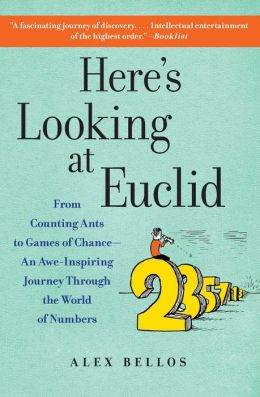
In attempting to make real life connections to one of the few print books I actually "completed" this summer, much of which I only partially understood, Here's Looking at Euclid, maybe I didn't follow the dictum of Strunk and White: "Pity the reader." Evidently, Mom was unable to fathom the spirit in which I wrote, so it is likely that most others probably were not able to fathom that spirit either. Without putting too much effort as I blogged, my intention was to "draft" a developing theme, real-life mathematical connections, something I plan to continue to write about. I did not care that I didn't have a solidified formal thesis, one that might generate a structured essay at this time. I have always considered my blog to be like an artists sketchpad. Imperfection, for me, is part of the fun! We all have a morbid fascination with train wrecks.
Let me once again briefly explain the spirit in which I blog. What I was attempting to do was connect what I was reading about data and probability to a real life example of a high risk wager that was occurring as I was reading -- two disk jockeys, Grant and Danny, had risked their jobs by declaring that they would not talk about anything else but baseball as long as the Nationals continued winning. Everybody knew that a continuation of the streak was highly unlikely. The mere suggestion of not talking about Washington's football team, however, was highly provocative. I thought it was a funny radio bit, which why I shared it, but I was not so invested in the bit that I wanted to spend a lot of time writing an essay about it. Thus, I probably did not provide enough context to make the joke understandable. The post was not simple, which violates a good rule to follow: keep it simple.
Mathematics has always challenging for me, which is why I have difficulty writing about it, and why feel I must continually be reading about it. I consider myself to be a "muscular mathematician," one who has always relied on drill, pattern, and procedures -- hard work -- rather than somebody who has gotten by with any genuine finesse or talent, particularly when compared to a truly innovative mathematician such as Gausse, one of my intellectual heroes. In Here's Looking at Euclid, the author's description of Daina Taimina's hyperbolic crochets, which I had read about in Science Magazine when she first published her findings in the 1990's, made it possible for me to visualize non-Euclidean geometry. Through the model of expanding curved space, I was able to comprehend how an ancient Euclidean axiom was shattered: given a line and a point, there is exactly one line parallel to the original line running through that point. What must be true about parallel lines in 2-dimensional space turned out not to be true in curved space, in which multiple parallel lines running through the point were possible. I was also able to follow explanations of the golden ratio, phi, which is based on the Fibonacci sequence (1, 1, 2, 3, 5, 8, 13, ...), particularly since I had become so familar with the sequence through repeated viewings of Donald Duck in Mathemagic Land, which I first enjoyed when I was in elementary school, and now show every year to my current students. Even though mathematics is challenging for me, I am okay with revealing a little vulnerability and my continued struggle.
Tomorrow, the faculty will convene at 8 am. It's back to the day job.
Like my son Joseph, I too was chased around the house by my mom at age 3, and forced to read a collection of Dr. Seuss books. Unlike Joe, I came to enjoy reading and have generally had little need for extrinsic motivation. Spelling, I consider to be a matter of form, not of substance, not entirely trivial, but of secondary importance. Likewise, I never worry about Joe's spelling. My aspiration has never to become an editor but to become a writer, somebody who creates, somebody who has a purpose for creating. From childhood, whenever I have written, I have explored concepts, connections, syntheses -- I have always been a bit of a risk-taker. Literacy, at some point, became the price of admission in a grand conversation which spans across the ages. When I write, I am perfectly okay with coming to questionable conclusions and having other people question me.
Mom criticized my most recent posting, in which I described what I considered a hilarious radio bit based on an improbable winning streak by my Washington Nationals. Mom said that I was "all over the place," i.e., inferring either that my thinking was random, or that I had done a poor job of communicating my point. My point in blogging, has always been to spark conversations.
In attempting to make real life connections to one of the few print books I actually "completed" this summer, much of which I only partially understood, Here's Looking at Euclid, maybe I didn't follow the dictum of Strunk and White: "Pity the reader." Evidently, Mom was unable to fathom the spirit in which I wrote, so it is likely that most others probably were not able to fathom that spirit either. Without putting too much effort as I blogged, my intention was to "draft" a developing theme, real-life mathematical connections, something I plan to continue to write about. I did not care that I didn't have a solidified formal thesis, one that might generate a structured essay at this time. I have always considered my blog to be like an artists sketchpad. Imperfection, for me, is part of the fun! We all have a morbid fascination with train wrecks.
Let me once again briefly explain the spirit in which I blog. What I was attempting to do was connect what I was reading about data and probability to a real life example of a high risk wager that was occurring as I was reading -- two disk jockeys, Grant and Danny, had risked their jobs by declaring that they would not talk about anything else but baseball as long as the Nationals continued winning. Everybody knew that a continuation of the streak was highly unlikely. The mere suggestion of not talking about Washington's football team, however, was highly provocative. I thought it was a funny radio bit, which why I shared it, but I was not so invested in the bit that I wanted to spend a lot of time writing an essay about it. Thus, I probably did not provide enough context to make the joke understandable. The post was not simple, which violates a good rule to follow: keep it simple.
Mathematics has always challenging for me, which is why I have difficulty writing about it, and why feel I must continually be reading about it. I consider myself to be a "muscular mathematician," one who has always relied on drill, pattern, and procedures -- hard work -- rather than somebody who has gotten by with any genuine finesse or talent, particularly when compared to a truly innovative mathematician such as Gausse, one of my intellectual heroes. In Here's Looking at Euclid, the author's description of Daina Taimina's hyperbolic crochets, which I had read about in Science Magazine when she first published her findings in the 1990's, made it possible for me to visualize non-Euclidean geometry. Through the model of expanding curved space, I was able to comprehend how an ancient Euclidean axiom was shattered: given a line and a point, there is exactly one line parallel to the original line running through that point. What must be true about parallel lines in 2-dimensional space turned out not to be true in curved space, in which multiple parallel lines running through the point were possible. I was also able to follow explanations of the golden ratio, phi, which is based on the Fibonacci sequence (1, 1, 2, 3, 5, 8, 13, ...), particularly since I had become so familar with the sequence through repeated viewings of Donald Duck in Mathemagic Land, which I first enjoyed when I was in elementary school, and now show every year to my current students. Even though mathematics is challenging for me, I am okay with revealing a little vulnerability and my continued struggle.
Tomorrow, the faculty will convene at 8 am. It's back to the day job.
Friday, August 22, 2014
Summer Reading plus the intersection of sports and life
"Girolamo Cardano was the first man to take Fortune hostage. It could be argued, in fact that the invention of probability was the root cause of the decline, over the last few centuries, of superstition and religion. If unpredictable events obey mathematical laws there is no need to have them explained by deities. The secularization of the world is usually associated with thinkers like Charles Darwin and Friederich Nietzsche, yet quite possibly the man who set the ball rolling was Cardano." (Bellos, A., 2011)
@funnydanny @bmcnally14 @1067thefandc @granthpaulsen
Getting hot enough in there yet? Hope they keep winning. Funny bit!
— Daniel Kurland (@PoeticLicencedk) August 22, 2014
Here's an amusing game of chance. With my Washington Nationals baseball team on a 10 game winning streak, recognized by the sports writing luminary Thomas Boswell as a truly rare, once-in-a-decades occurrence, Grant and Danny from 106.7 the Fan decided to partake in what I consider a hilarious, high wire radio bit!
Yesterday, with the Nationals' winning streak at 9 games, Grant and Danny decided to go "all Nats all the time" as long as Nats continue winning. Today, at the beginning of the show, after the 10th win, another improbable walk-off beauty decided in the 9th inning, Grant and Danny invited their boss, CK, on the air and were ribbing their boss good-naturedly, "what if the Nats don't lose another game all season?" CK replied with a thinly veiled threat about the show being on the hot-seat, since everybody knows that "all Nats all the time" has a high probability of becoming "ratings poison." Probably, even Matt Williams did not expect this team to go on a 10-game winning streak when he promised to do his Babe Ruth impression if the team were to achieve that remarkable feat, but now world is watching and waiting. With the San Francisco Giants on a long road trip, having just completed a double header with New York, even though the Nats must face their nemesis Tim Hudson, who always seems to beat them, the Nats counter with Doug Fister on the mound. Will the streak continue? I like their chances
What if the Nats do keep winning? With another installment of grand theater occurring tonight, with Dave Jageler and Henry Slowes doing the play-by-play and commentary on the Nationals flagship station, I cannot wait to see how the Grant and Danny's bit might end. Hopefully, not tonight!
In DC, Washington's football team -- I no longer use the team's name because the kind-hearted Washington Post journalist Mike Wise long ago, when he had the mid-day show on the Fan, persuaded me that my childhood team's name is extremely offensive -- is the undisputed king of DC's entertainment market, the 800 pound gorilla in the room. In my case, I have obsessed over Washington's football team since the days of George Allen and "The Over The Hill Gang," i.e., for over 40 years, but during the NFL preseason, everybody knows that the preseason games do not matter. Despite the fact that what Sean Salisbury calls "fake football" is clearly an inferior product, the media around town has always given the team, even during the preseason, what some might consider an inordinate amount of coverage. Why? Money.
Since the WFT has performed terribly and has, in so many well-documented ways, seemed to take the fanbase for granted ever since Dan Snyder took over the team, suing little old ladies who didn't renew their tickets, suing a small local paper that wrote a satirical article featuring a picture of Mr. Snyder that had been cartoonishly edited to include devil horns, etc., my interest in following every change in WFT's roster during the preseason, has waned. I get the sense that the ubiquity of the local media coverage has also shrunk, much like our polar ice caps. Given how my interest has diminished, I wonder whether others feel the same way about a product which many perceive has become inferior. Is it possible that the market for "fake football" in DC has, in fact, taken a downward trend? Is this the tip of the iceberg? Are entertainment tastes shifting under our feet? Grant and Danny have provided a fun, fascinating experiment to test the proposition that the DC sports entertainment market might find the celebration of a hot pennant race, with a "once in a decade" streak to be more interesting than so-called "news" from training camp(s)?
Will the DC entertainment market take notice of a rare moment of innovation, when somebody in the media had the stones to go "all in," to actually perform a high-stakes experiment that might actually produce facts, i.e., ratings, rather than blindly accepting dogma? Grant and Danny's experiment might crash and burn, and might prove to be "ratings poison," but I like it! As I was reading about data and chance today, I came across a mathematical idea that might give local fans a reason for hope.
"Randomness is not smooth. I creates areas of empty space and overlap... Randomness can explain why some small villages have hither than normal rates of birth defects, why certain roads have more accidents, and why some games basketball players seem to score every free throw. It's also why in 7 of the last 10 World Cup soccer finals at least two players shared birthdays." (Bellos, 2011)Joe just popped his head in and exclaimed, "There can't be anything more exciting than this. Can't we go?"
I replied, "I don't have the money." Joe, of course, persisted. I reminded him about the last time we were at Nationals Park. The seats had been filled with mostly orange. There had been a rain delay -- 30,000 fans had been stuck under the concourse for over 3 hours before they called that game. The Washington part of the equation did not show up to to the make up game. Those who did return, like myself, failed to wear red. If we went during the streak, I argued, sounding very reasonable, it would be bad karma. "We can't go, it would be bad karma."
Joe uttered the gambler's fallacy in reply. "They normally win when we go."
"If the streak reaches 14 games, we will go," I relented, knowing that would be a highly unlikely occurrence, worth the risk of loss, and highly entertaining. What would Grant and Danny be talking about then? Would it be "ratings poison?" I can't wait to find out, just like I can't wait to find out how Jane Eyre ends. There are few things more intriguing than a good mystery.
Bellos, Alex. Here's Looking at Euclid: From Counting Ants to Games of Chance, an Awe-inspiring Journey through the World of Numbers. New York, NY: Free, 2011. Print.
http://baseballsavant.com/apps/leader.php
Monday, August 18, 2014

Saturday, August 9, 2014
Freedom
Freedom is the feeling of being able to do what you want when you want. It has been a long time since I have felt that way, because since just a little after 9/11/2001, when on one Monday morning I handed in my pager, my Nextel, and my keys, having marched into Bob and Gene's office on Grovedale Avenue and walked away from the only company I had worked for after graduating from college, Allied Plywood, I have lived with a gnawing uncertainty, knowing I had prepared for some uncertainty by amassing a hoard of cash, had lined up a $100,000 home equity line of credit when I did not need it, and had a fully vested stake in the company worth, on paper about $100,000 at the time, which in theory I would not have to touch until I was 65, but could not touch without a substantial penalty until 5 years after my break in service with the company.
Most people do not have options. I, on the other hand, knew I could endure living a few months without positive cash flow.
What I did not know at the time was just how difficult it would be to gain any traction on the job market, that I would bleed cash for over a decade, and that life without the certainty of having a job would become such a test of everything I believed. Friday was the final day of summer school, and after I wrapped my room in paper so that when the custodians wax my floor my they won't splatter everything, for the first time in over a decade, I knew that in three weeks I would positively be returning. Finally I am on a vacation that I can enjoy. That's freedom!
During the roaring 80's when Allied Plywood felt like a mythical cash cow, Gene, from his desk from which he would hold court over the sales floor at Eisenhower Avenue, Gene used to always remark with arms folded, smiling like a chesire cat, with a smirk that everyone who had ever left Allied Plywood had always returned. That was before the diaspora after relationships had frayed and everybody from the top down had decided that, even at the 100% employee-owned Allied Plywood, it had become every man for himself.
The other day after Joe did not get the call from a local travel baseball team, in response to Joe's declaration that he was refusing to play Babe Ruth, I reminded Joe about how Michael Jordan used being cut from his freshman team, how the legend used his anger and disappointment of being placed on the JV team against every competitor he ever faced afterwards. Long after he had reached the mountaintop, after multiple titles, Michael Jordan would always remind everybody about the coach in Wilmington who had disrespected him. My question to Joe was the question I always ask, "What are you going to do about it?" I continued, after you become a doubles and triples machine against so-called "inferior pitching," considering your glove work and range, nobody will be able to take your spot on the varsity team away from you.
I wanted Joe to hold that feeling of anger and disappointment and use it to drive him as I use that same feeling of having been disrespected for years as I tried to get a foothold in the education profession, only to be rejected time after time after time. "Make 'em all pay," I told him. I teach with a mountain-sized chip on my shoulder. When others tell me, "Kurland, just leave," I play along, but never leave until I feel I am in position to succeed the next day. To prepare for freedom this time, last weekend I cashed in another $3 grand so that in September my payments don't begin to bounce. Also, I was up all night Thursday preparing Summer School dossiers, which I passed out to students during my showing of Donald Duck in Mathemagic Land. In response to the daily end of class reflection question about how to make real world connections to math, I wanted to instill in my students a feel of wonder and an overall sense that math was relevant to them. It was extremely gratifying when, students spontaneously began to cheer when the movie was done.
My dad has often asked, "What would you do if money wasn't a question?" Today, I finally get to explore that question. Today, I get to do things because I want to, not just because I have to. Today, I write because that's what writers do. That's freedom!
What I did not know at the time was just how difficult it would be to gain any traction on the job market, that I would bleed cash for over a decade, and that life without the certainty of having a job would become such a test of everything I believed. Friday was the final day of summer school, and after I wrapped my room in paper so that when the custodians wax my floor my they won't splatter everything, for the first time in over a decade, I knew that in three weeks I would positively be returning. Finally I am on a vacation that I can enjoy. That's freedom!
During the roaring 80's when Allied Plywood felt like a mythical cash cow, Gene, from his desk from which he would hold court over the sales floor at Eisenhower Avenue, Gene used to always remark with arms folded, smiling like a chesire cat, with a smirk that everyone who had ever left Allied Plywood had always returned. That was before the diaspora after relationships had frayed and everybody from the top down had decided that, even at the 100% employee-owned Allied Plywood, it had become every man for himself.
The other day after Joe did not get the call from a local travel baseball team, in response to Joe's declaration that he was refusing to play Babe Ruth, I reminded Joe about how Michael Jordan used being cut from his freshman team, how the legend used his anger and disappointment of being placed on the JV team against every competitor he ever faced afterwards. Long after he had reached the mountaintop, after multiple titles, Michael Jordan would always remind everybody about the coach in Wilmington who had disrespected him. My question to Joe was the question I always ask, "What are you going to do about it?" I continued, after you become a doubles and triples machine against so-called "inferior pitching," considering your glove work and range, nobody will be able to take your spot on the varsity team away from you.
I wanted Joe to hold that feeling of anger and disappointment and use it to drive him as I use that same feeling of having been disrespected for years as I tried to get a foothold in the education profession, only to be rejected time after time after time. "Make 'em all pay," I told him. I teach with a mountain-sized chip on my shoulder. When others tell me, "Kurland, just leave," I play along, but never leave until I feel I am in position to succeed the next day. To prepare for freedom this time, last weekend I cashed in another $3 grand so that in September my payments don't begin to bounce. Also, I was up all night Thursday preparing Summer School dossiers, which I passed out to students during my showing of Donald Duck in Mathemagic Land. In response to the daily end of class reflection question about how to make real world connections to math, I wanted to instill in my students a feel of wonder and an overall sense that math was relevant to them. It was extremely gratifying when, students spontaneously began to cheer when the movie was done.
My dad has often asked, "What would you do if money wasn't a question?" Today, I finally get to explore that question. Today, I get to do things because I want to, not just because I have to. Today, I write because that's what writers do. That's freedom!
Subscribe to:
Posts (Atom)